


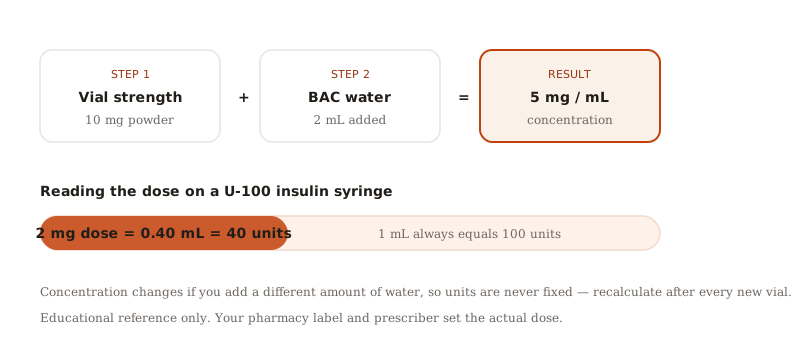
For individuals who have received this investigational, compounded peptide as a lyophilized powder, knowing how to reconstitute retatrutide is a practical necessity. Reconstitution refers to the straightforward act of mixing that dry powder with a sterile liquid, resulting in an injectable solution of known strength. This page provides an educational overview of retatrutide reconstitution, including a general mixing table, storage guidance, and safety precautions. It is not medical advice and does not replace the instructions on your pharmacy label or those given by your prescribing doctor.
Important: Retatrutide has not been approved by the FDA. It is an investigational substance that can only be obtained through a licensed healthcare provider and a compounding pharmacy. Always adhere to the exact concentration, dosage, and preparation steps shown on your product label. The numbers provided here are generic references to help with understanding the calculations, not a prescription.
What reconstitution means and why BAC water is used
Peptides like retatrutide are supplied as a dry, freeze-dried cake or powder inside a sealed glass vial, since this form provides better stability. The powder has to be dissolved before the medication can be drawn into a syringe. This dissolving step is called reconstitution.
The usual diluent for multi-use peptide vials is bacteriostatic water (often shortened to 'BAC water'), which is sterile water containing a small amount of benzyl alcohol. The benzyl alcohol serves as a preservative that prevents bacterial growth, allowing a vial to be punctured repeatedly over the course of several days. Plain sterile water and normal saline lack this preservative, so BAC water is generally preferred for vials that will be used across multiple injections. The appropriate diluent and volume for your product will be stated on your pharmacy label.
How the concentration calculation works
Concentration is calculated by dividing the total milligrams of peptide by the milliliters of BAC water added. When less water is used, each unit on the syringe delivers a larger amount of medication; when more water is added, each unit delivers a smaller amount. Because insulin syringes are marked in units (100 units = 1 mL), many people also work in milligrams per 10 units, which equals one-tenth of a milliliter. A reconstitution calculator can do this math for you, but understanding the basic ratio helps you spot errors.
How to mix retatrutide with BAC water: a step-by-step procedure
Below is the standard approach for mixing retatrutide. Work on a clean surface, wash your hands, and use fresh sterile supplies for every step. If anything in the process is unclear, stop and check with your pharmacy.
Gather your supplies
You will need the sealed retatrutide vial, a vial of bacteriostatic water, alcohol swabs, and a sterile syringe with a needle for drawing the diluent. Let both vials come to room temperature and inspect the powder and water for any irregularities.
Swab both vial tops
Wipe the rubber stoppers of the retatrutide and BAC water vials with a new alcohol swab. Allow them to air dry for a few seconds so the surface is clean before the needle goes in.
Draw the bacteriostatic water
With your sterile syringe, draw up the exact volume of BAC water specified for your vial (for instance, 1 mL, 2 mL, or 3 mL). Pull the plunger to your target mark and check for large air bubbles.
Inject the water against the side of the vial
Put the needle into the retatrutide vial and release the water slowly, letting it run gently down the inner glass wall rather than straight onto the powder. A slow, angled stream is gentler on the peptide.
Swirl, do not shake
Take out the needle and gently swirl or roll the vial. Do not shake it vigorously, since excessive agitation and foam can damage the fragile peptide chains.
Let it fully dissolve
Put the vial down and wait a minute or two. The solution should turn clear with no visible particles before you draw your first dose. If it stays cloudy or has particles in it, do not use it.
After mixing, confirm your specific per-injection dose against your provider's dosing chart and review how to inject retatrutide before administering.
Retatrutide reconstitution chart
This retatrutide mixing chart shows how varying volumes of BAC water change the concentration for common vial sizes. Treat it only as a general math reference; the actual concentration you should use is determined by your compounding pharmacy.
| Vial size | BAC water added | Concentration (mg/mL) | Dose per 10 units (0.1 mL) |
|---|---|---|---|
| 5 mg | 1 mL | 5 mg/mL | 0.5 mg |
| 10 mg | 1 mL | 10 mg/mL | 1.0 mg |
| 10 mg | 2 mL | 5 mg/mL | 0.5 mg |
| 15 mg | 1.5 mL | 10 mg/mL | 1.0 mg |
| 20 mg | 2 mL | 10 mg/mL | 1.0 mg |
| 30 mg | 3 mL | 10 mg/mL | 1.0 mg |
| 30 mg | 2 mL | 15 mg/mL | 1.5 mg |
How much BAC water is needed for 10mg, 20mg, and 30mg retatrutide
These are the questions asked most often, so here is the direct answer:
What amount of BAC water is required for 10 mg of retatrutide
Dissolving a 10 mg vial with 1 mL of BAC water yields a 10 mg/mL solution, which means 10 units on an insulin syringe deliver 1 mg. With 2 mL, the concentration drops to 5 mg/mL, so 10 units then provide 0.5 mg. Using a larger volume of water allows smaller doses to be measured more accurately.
How much BAC water should be used for 20 mg of retatrutide
With a 20 mg vial, 2 mL of BAC water results in 10 mg/mL. At that concentration, 10 units correspond to 1 mg and 5 units to 0.5 mg, which makes dose adjustments simple.
How much BAC water should be used for 30 mg of retatrutide
For a 30 mg vial, 3 mL of BAC water also gives 10 mg/mL, keeping calculations consistent. If your dosing plan calls for smaller injection volumes, 2 mL would produce a more concentrated 15 mg/mL solution. Always follow the label instructions for your specific product.
Quick reference:
- No matter the vial size, keeping the same water-to-mg ratio produces the same concentration.
- Matching 10 mg with 1 mL, 20 mg with 2 mL, and 30 mg with 3 mL each yields a concentration of 10 mg/mL.
- On a U-100 insulin syringe, 1 mL of BAC water is equivalent to 100 units.
- Adding a greater amount of diluent lowers the concentration and improves accuracy when measuring small doses.
If you are unsure whether compounded retatrutide is right for you, start with a short consultation led by a healthcare provider.
Get startedRetatrutide storage, refrigeration, and shelf-life considerations
Retatrutide must be stored properly to preserve its potency and sterility. Because handling differs before and after reconstitution, it helps to consider each phase separately.
Does retatrutide need to be refrigerated?
After reconstitution, retatrutide generally needs to be refrigerated at about 2–8°C (36–46°F). Cold temperatures slow the degradation of the dissolved peptide and help maintain it throughout the days you use the vial. Before mixing, the sealed lyophilized powder is more stable and is frequently refrigerated as well, though many compounded products can withstand short periods at controlled room temperature during shipping. Follow your label, since it reflects how your specific formulation was prepared.
Before-mixing storage
Keep the unopened vial in its original packaging, refrigerated as directed, and protect it from light and heat until you are ready to reconstitute it.
Storage and shelf life following reconstitution
After reconstitution, keep the vial upright in the refrigerator and record the date you mixed it. Compounded peptides have a beyond-use date set by the pharmacy, and reconstituted retatrutide typically lasts a few weeks rather than months. Never use a mixed vial beyond its beyond-use date, even if liquid remains.
Always shield from light and avoid freezing.
Keep the vial out of direct sunlight and bright light. Never freeze reconstituted retatrutide, because freezing and thawing can damage the peptide and cause loss of activity. If a vial has been frozen, exposed to prolonged heat, or looks cloudy or discolored, throw it away instead of injecting.
Sterility and safety: Use a new sterile needle and syringe for every draw, swab the stopper with alcohol each time, and never share vials or supplies. If you notice contamination, particles, cloudiness, or a broken seal, do not use the product. Watch for and report any adverse reactions, and review potential the adverse effects reported in trials with your provider.
Frequently asked questions
In the context of retatrutide, what does reconstitution mean?
It means combining the lyophilized retatrutide powder with bacteriostatic water to form a liquid that can be measured and injected at a known concentration. The powder cannot be injected until it has been reconstituted.
Can regular water or saline be used instead of bacteriostatic water?
When a vial is going to be punctured more than once, bacteriostatic water is usually the go-to option, since its preservative helps hold back bacterial growth across repeated withdrawals. The diluent named on your pharmacy's label should always be the one you use, and if anything is unclear, check with your healthcare professional.
What makes swirling the better option compared with shaking?
Peptide molecules are delicate. Vigorous shaking introduces froth and mechanical stress that can damage them, while swirling gently until the solution turns clear is the gentler, safer approach.
How long can reconstituted retatrutide be kept?
It depends on the beyond-use date set by the pharmacy, but as a general rule a reconstituted peptide stays stable for several weeks in the refrigerator. Rather than going by a rough estimate, follow the expiration date and storage temperature printed on your label.
After reconstitution, does retatrutide have to be refrigerated?
Yes — generally speaking, reconstituted retatrutide belongs in a refrigerator at about 2–8°C, kept out of light and never frozen. Check your product label for the exact storage conditions that apply.
Does this reconstitution guide stand in for my dosing instructions?
No. This guide merely shows how different diluent volumes change the concentration. Your own dose and the steps for reconstitution come from your provider and are spelled out on the pharmacy label.
The content here is educational only and centers on reconstituting and storing retatrutide. Retatrutide is an investigational compound that has not been FDA approved; it can only be obtained through a licensed provider and a compounding pharmacy. None of this substitutes for professional medical guidance or the directions that come with your medication. Always confirm the concentration, dose, preparation method, and storage conditions with your provider and the pharmacy label before use.
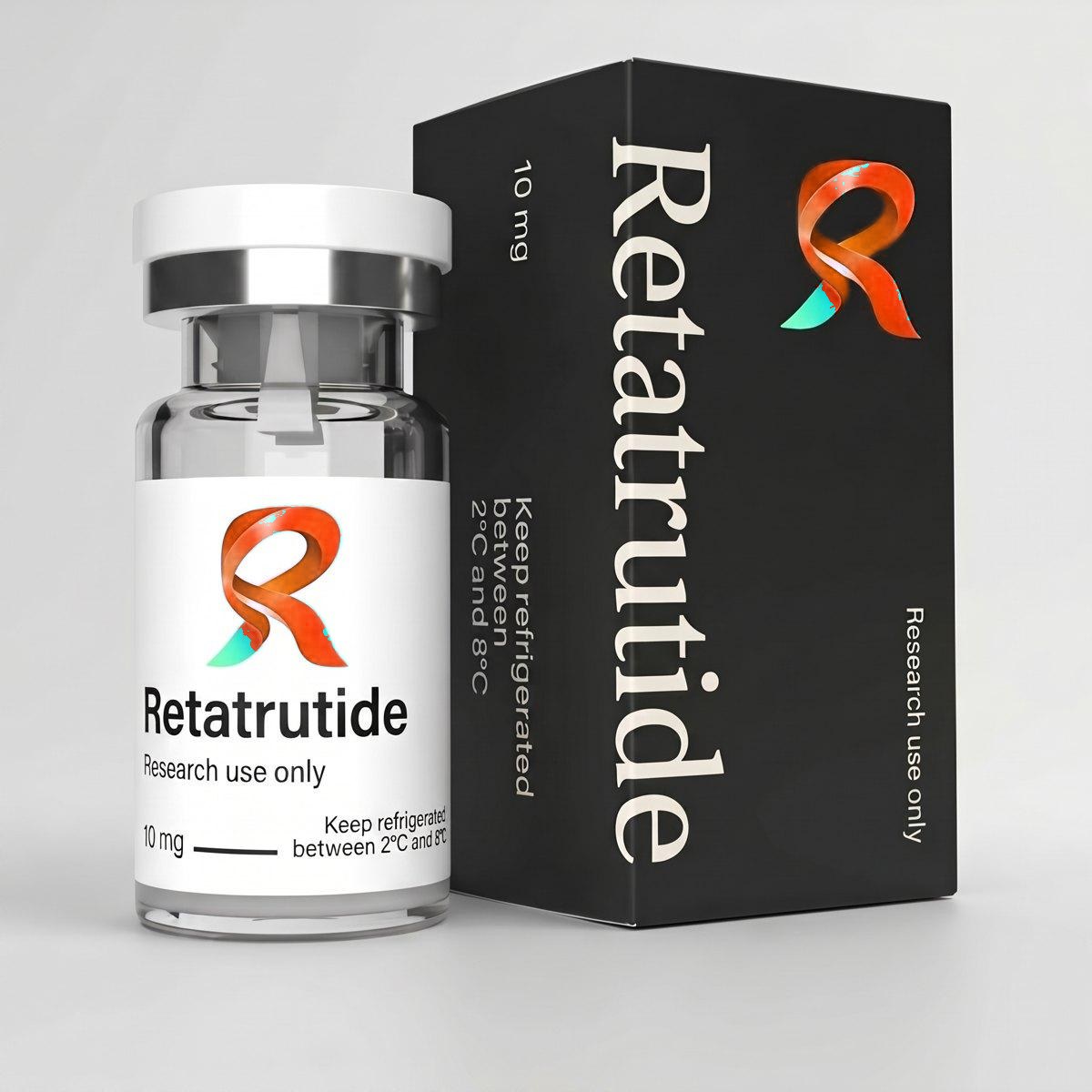
Research-grade · COA per lot