


Learning to inject retatrutide is mostly about mastering a handful of subcutaneous methods and then doing them the same way week after week. Retatrutide is a peptide still under investigation that targets three receptors, and it not FDA-approved and where it can be obtained, it is produced solely by a compounding pharmacy and dispensed through a licensed physician and pharmacy. This material is educational only and is not a substitute for your prescription label's directions or your doctor's demonstrations. Should your clinician's guidance differ from what appears here, defer to your clinician.
Quick orientation
- Route: into the fatty tissue beneath the skin, never into a muscle or a blood vessel.
- Frequency: generally once per week, on a consistent day each time.
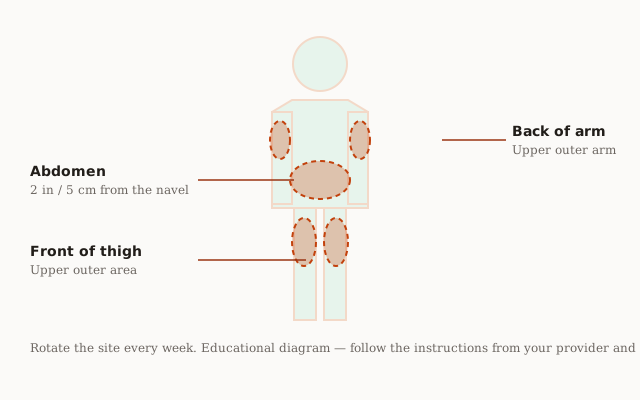
- Sites: the belly, the upper thigh, or the rear of the upper arm, alternating with each shot.
- Dose: measured in units on an insulin syringe; the unit count corresponds to milligrams according to the concentration of the reconstituted vial.
- Safety: maintain sterile technique at all times and discard every needle into an appropriate FDA-cleared sharps container.
Retatrutide has not received approval. Never attempt to source it by yourself or estimate a dose. A retatrutide injection may be administered only using the exact product, strength, and quantity authorized by your physician and pharmacy.
Administering a subcutaneous retatrutide injection: the fundamentals.
A retatrutide shot is placed into the fat beneath the skin, a gentle layer that absorbs peptide medications slowly and steadily. Because the needles are extremely fine and small (frequently a 29-31 gauge insulin syringe), most people find the process fast and less painful than they expect. What matters most is consistency: the same injection route, a clean site, the correct dose, and gentle handling of the skin.
Supplies you will typically need
A vial of the reconstituted medication, insulin syringes that match your dose, alcohol wipes, a clean surface, and a sharps bin. Your pharmacy will state the exact syringe size and needle length. If the product arrives as a dry powder requiring mixing, reconstitute it by following the pharmacy's directions so that reconstitute retatrutide you do this before measuring any dose, since the mixing ratio determines how many units correspond to the milligrams you are meant to take.
Where to administer the retatrutide injection and how to rotate sites
Selecting where to inject retatrutide matters just as much as the injection method itself. The three typical areas are the abdomen, the front or side of the thigh, and the rear of the upper arm. For belly shots, keep roughly two inches of distance from your navel and aim away from your natural waistline. Lots of people favor the abdomen as the ideal retatrutide injection location because it is easy to reach and pinch, though the thigh and upper arm are equally valid retatrutide injection spots that help you rotate.
Best retatrutide injection site: rotate deliberately.
There is no single spot that is always the absolute "best" for everyone. The ideal retatrutide injection area is a clean, normal fat layer you have not used lately. Move no less than an inch from your last injection and rotate among sites every week. Changing areas helps ward off soreness, lumps, and hardened skin that come from overusing one site. If you ask yourself "where do I put the retatrutide," the simple answer is: somewhere new to you.
| Injection site | Why people choose it | Things to watch |
|---|---|---|
| Belly (~2 inches from the navel) | Simple to see and pinch; uniform fat layer | Steer clear of the navel, scars, stretch marks, and waistline |
| Front/outer thigh | Easy to reach while seated; well suited to self-injection | Pick the fleshy front of the thigh, not the inner portion or near the knee |
| Back of upper arm | Discreet; useful for rotation | A helper will likely be needed to pinch enough tissue here |
Never inject into skin that is bruised, red, swollen, tender, scarred, or hardened. Keep away from any area near a hernia, tattoo, or broken skin.
Retatrutide administration: a step-by-step walkthrough
The steps below cover injecting retatrutide into the abdomen or another approved site. Go through all the instructions before your first dose, and if you can, have your healthcare provider watch your first attempt.
Wash your hands
Wash your hands with soap and warm water for at least 20 seconds, then dry them with a clean towel. Clean hands are your primary protection against infection.
Examine the vial and sanitize it
Verify that the solution is clear and free of particles. Wipe the rubber stopper with a new alcohol swab and allow it to dry completely.
Draw the correct dose in units
Pull air into the syringe equal to your dose, inject it into the vial, and then withdraw the exact prescribed units. Tap the syringe to remove air bubbles and confirm the plunger is at the right mark.
Sanitize and pinch the injection site
Swab the chosen area and let it dry. Gently pinch a fold of skin to lift the fatty tissue away from the muscle underneath.
Insert at 90 degrees
Using a short insulin needle, insert it straight in at a 90° angle in one smooth motion. Very lean individuals may be instructed to use a 45° angle instead.
Inject slowly and withdraw
Push the plunger down slowly and steadily, release the pinch, then pull the needle out straight. Apply gentle pressure with a clean pad if necessary; do not rub vigorously.
Discard the needle in a sharps container
Place the used syringe directly into an FDA-cleared sharps container. Never recap, reuse, or throw away a needle loose.
Unsure if retatrutide is right for you? Take a two-minute eligibility quiz and consult a licensed provider.
Get startedRetatrutide dosing in units on the syringe: how to read your dose
For beginners, one of the most confusing aspects is retatrutide dosing in units on a syringe versus the milligrams listed on the prescription. An insulin syringe is marked in units units (for example, up to 50 units on a 0.5 mL syringe), while your prescribed dose is given in milligrams milligrams. The number of units corresponding to your milligram dose depends entirely on the concentration used during reconstitution.
Why the same dose may appear as different unit numbers
If a vial is reconstituted to be more dilute, your dose will occupy more units; if it is more concentrated, the same milligram dose will take fewer units. Therefore, you should never copy someone else's unit amount. For a detailed guide on converting milligrams to the marks on your syringe, refer to the instructions on reading your dose in units, and use a dosage calculator to double-check the calculations against your specific vial before drawing up.
Always confirm your unit count matches your pharmacy label and your provider's written instructions. If the calculated units do not agree with the label, stop and contact your pharmacy before injecting.
Titration, briefly
Compounded retatrutide is usually started at a low dose and increased gradually under supervision to manage tolerability. Your prescriber determines the schedule; do not increase your own dose to accelerate results.
Timing, frequency, and how it is given
How frequently should retatrutide be injected, and when is the ideal time to administer it?
With the majority of dosing schedules, retatrutide is given as a weekly injection. Pick one day of the week and stick with it. No particular hour of the day is medically required for a retatrutide shot; the ideal timing is simply whenever you can be consistent and unhurried, morning or evening alike. Food intake generally does not affect retatrutide, so it may be given with or without eating. Should you miss your usual day, seek guidance from your healthcare provider about missed doses instead of taking a double amount.
Comparing the retatrutide injection pen with the insulin syringe and vial approach
You may come across mentions of a retatrutide injection pen, yet because retatrutide remains investigational and compounded, it usually arrives as a vial from which you draw doses with an insulin syringe rather than as a prefilled branded pen. If a pen-style device does become available, it lets you dial the dose and keeps the needle hidden, which some people find simpler; the vial-and-syringe approach is widely used, inexpensive,costand lets you measure exact units. Regardless of which format your pharmacy supplies, the same principles apply for selecting injection sites, rotating them, and keeping the process sterile.
Consistency beats perfection
A consistent weekly habit and clean injection technique count for more than the particular device or the precise hour of the day. Build a straightforward routine that you can follow reliably.
Comfort, safety, and knowing when to get medical help
Reducing pain and bruising
Let the alcohol dry fully before you insert the needle (wet alcohol can sting). A new needle should be used for every injection, since reused needles grow dull and hurt more. Insert in one smooth, confident motion and push the plunger slowly. Do not rub the site afterward, and avoid visible veins to reduce bruising. Slight redness, itching, or a small lump can happen; reactions that persist or worsen are covered in greater detail under injection-site reactions.
Sterility and sharps disposal
Every needle and syringe is intended for a single use, equipment must never be shared, and the vial should stay capped and be stored according to your pharmacy's directions. Put used sharps straight into an FDA-cleared sharps container, then follow local rules for getting rid of the full container instead of placing it in household trash.
Get medical help without delay if you notice signs of a serious allergic reaction (trouble breathing, swelling of the face, lips, or throat, hives), severe or ongoing stomach pain, continued vomiting, symptoms of low blood sugar, or if the injection site turns hot, hurts more and more, or leaks pus. Whenever you are unsure, reach out to your healthcare provider.
Frequently asked questions
Can retatrutide be injected into my abdomen every week?
Yes, the abdominal area can be used on a regular basis, but you should still change the exact spot each time. To inject retatrutide into the stomach correctly, move at least an inch away from your previous injection site and remain about two inches from the navel every time.
Does the time of day when I inject matter?
For most people, it makes no medical difference. The best time to inject retatrutide is whatever time you can keep to consistently week after week. Pick a day and time that suit your schedule.
How can I tell how many units to draw?
The number of units is determined by your vial's concentration. Verify the dosage against your pharmacy label, the dosing instructions, and a dosage calculator. Never copy the unit amount someone else uses.
What should I do if I notice a small bubble in the syringe?
Tap the barrel so the bubbles rise to the top, then gently push them out before injecting. Subcutaneous injections can tolerate tiny bubbles, but you should still try to remove them and confirm the correct unit measurement.
Is a pen superior to a syringe?
Neither option is inherently better. A retatrutide injection pen may seem more convenient, whereas a syringe and vial permit precise unit dosing and are what most compounded products rely on. Whichever device your pharmacy provides, use it correctly.
What should I do if I miss my weekly dose?
Follow your healthcare provider's guidance on missed doses. Do not take a double dose to make up for it. If anything is unclear, contact your clinic before the next scheduled injection.
This content is provided for educational purposes only and is not medical advice. Retatrutide is an investigational compound that has not been approved by the FDA. Your prescriber and dispensing pharmacy must give the final instructions on technique, dosage, timing, and storage.
Research-grade · COA per lot