


This retatrutide dosage calculator turns three essential figures into a straightforward result: the peptide quantity in your vial, the volume of bacteriostatic water you introduce, and the insulin units required for the dose your provider prescribed. Retatrutide is a compounded, experimental peptide that is not FDA-approved not intended for weight loss or any other use, and in the US it can only be obtained through a licensed physician and a compounding pharmacy. The tool provided below acts as an educational resource to help you grasp the math once you have a valid prescription and a pharmacy label. It does not prescribe, diagnose, or recommend a dose.
- What it does: converts vial strength (mg) and bacteriostatic water (mL) into concentration, volume per dose, and insulin units.
- Unit basis: a standard U-100 insulin syringe, in which 1 mL equals 100 units.
- Status: retatrutide remains under investigation and is compounded, with no approved product label.
- Authority: your prescriber and the pharmacy label always override any figure displayed here.
Retatrutide reconstitution calculator
Enter your values and the results refresh instantly. This retatrutide reconstitution calculator assumes you are using a lyophilized vial that you mix with bacteriostatic water prior to injection.
Concentration 5 mg/mL
Volume per dose 0.40 mL
Dose on insulin syringe 40 units
These results are intended for educational estimation only. They do not constitute medical advice and do not replace the instructions from your doctor or the compounding pharmacy. The dose stated on your pharmacy label is the ultimate authority. Do not change your dose, titration schedule, or injection technique based on this page.
How to use this retatrutide dosing calculator
The retatrutide dosing calculator needs only the information already present on your vial and pharmacy paperwork. Always adhere to the label; use the tool to verify the volume you plan to draw.
Reading your three inputs
- Vial strength: the total mg of retatrutide contained in the vial, for example, 5 mg, 10 mg, or 30 mg. This refers to the entire vial, not a single dose.
- Bacteriostatic water: the mL of bacteriostatic water that you (or the pharmacy) add to dissolve the powder. Adding more water yields a less concentrated solution; adding less water makes it more concentrated. The total amount of peptide remains unchanged.
- Desired dose: the mg your provider has prescribed for this injection, such as 0.5 mg initially or 2 mg later during titration.
A worked example
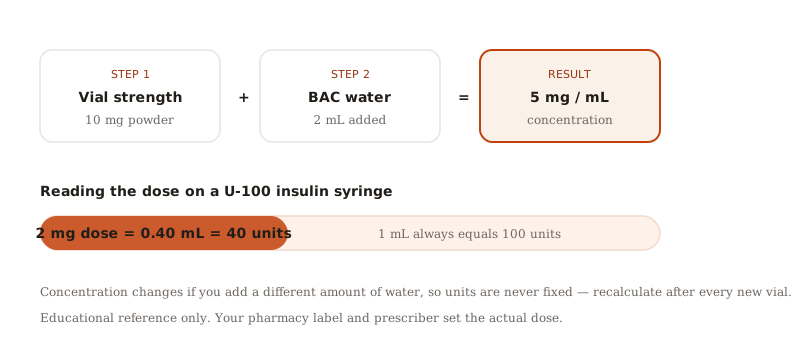
For instance, with a 10 mg vial and 2 mL of bacteriostatic water, the concentration is 10 mg divided by 2 mL, which equals 5 mg/mL. If your prescribed dose is 2 mg, then the volume is 2 mg ÷ 5 mg/mL, which comes to 0.4 mL. On a U-100 insulin syringe, 0.4 mL is 40 units. This corresponds to the default values in the fields above, so you can change one number at a time and watch each result update.
Why the reconstitution math matters: mg vs mL vs units
Newcomers to peptides frequently mix up these three measurements. Milligrams represent the quantity of drug. Milliliters represent the liquid volume you draw. Units are merely the markings on an insulin syringe. The retatrutide bac water calculator exists because these three are linked but not interchangeable, and confusing them is the most common cause of accidental over- or under-dosing.
How concentration is derived
Concentration is the basis for all other calculations. It is the vial strength divided by the volume of bacteriostatic water used:
Concentration (mg/mL) = vial strength (mg) ÷ bacteriostatic water (mL)
Volume per dose (mL) = desired dose (mg) ÷ concentration (mg/mL)
Units = volume per dose (mL) × 100
Because units are simply volume × 100 on a U-100 syringe, once you know the volume in mL, you can read the syringe directly. A retatrutide peptide calculator that provides units in the result spares you from performing this final mental step at the time of injection. For complete instructions, see our guide on how to reconstitute retatrutide.
The same vial, two different reconstitution volumes
The volume of water you select changes the units per dose, even though the mg stay the same. If you add 1 mL to a 10 mg vial, the concentration is 10 mg/mL, so a 2 mg dose is only 0.2 mL, or 20 units. If you add 2 mL to the same vial, the same 2 mg dose becomes 0.4 mL, or 40 units. Neither contains more or less drug per dose; only the syringe reading changes. This underscores why you must reconstitute with the exact volume your pharmacy specifies.
Illustrative calculations for 5 mg, 10 mg, and 30 mg vials
These illustrations show how the retatrutide mixing calculator works for the usual vial strengths found in compounded preparations. In each instance, you enter the dose you plan to take; the units displayed are what you draw up on the syringe.
| Vial strength | BAC water added | Concentration | Desired dose | Volume | Insulin units |
|---|---|---|---|---|---|
| 5 mg | 1 mL | 5 mg/mL | 1 mg | 0.20 mL | 20 units |
| 5 mg | 2 mL | 2.5 mg/mL | 1 mg | 0.40 mL | 40 units |
| 10 mg | 1 mL | 10 mg/mL | 2 mg | 0.20 mL | 20 units |
| 10 mg | 2 mL | 5 mg/mL | 2 mg | 0.40 mL | 40 units |
| 30 mg | 3 mL | 10 mg/mL | 4 mg | 0.40 mL | 40 units |
| 30 mg | 6 mL | 5 mg/mL | 4 mg | 0.80 mL | 80 units |
Observe the steady relationship: higher concentration means fewer units for the same milligram dose. A 30 mg vial is not a 30 mg dose. It is a larger supply that you divide into several injections based on your prescribed titration, which our dosage guide covers in detail. Treat this table only as a way to check the tool, not as a method to set your own dose.
Would you like a healthcare professional to evaluate whether a compounded GLP-1 regimen fits your needs? Start with a short eligibility questionnaire.
Get startedCommon mistakes and advice for interpreting units
Frequent pitfalls when using the retatrutide dose calculator
- Treating the whole vial as one dose. A 10 mg vial holds several doses. The most serious mistake is entering the entire vial as your intended dose.
- Changing the water volume without recalculating. If you use a different amount of bacteriostatic water than your label specifies, every unit measurement will change. Whenever the mixture is altered, recalculate with the retatrutide dosage calculator in units.
- Confusing units with milliliters. On a U-100 syringe, 40 units and 0.4 mL represent the same volume, but only on a U-100 syringe. Confirm that your syringe is marked U-100.
- Rounding aggressively. With a concentrated solution, a small rounding difference can be a large fraction of a small dose. Measure to the nearest marked unit and check with your pharmacy if unsure.
- Using tap water or sterile water intended for irrigation. Use bacteriostatic water for reconstitution unless your pharmacy directs otherwise.
Reading the syringe cleanly
Keep the syringe at eye level, expel air bubbles before reading, and line up the top dark ring of the plunger with the target unit mark. If your prescribed volume lies between two marks, do not guess. Ask the pharmacy whether a different reconstitution volume would make your dose fall on a whole unit line. When you are ready to inject, our guide on how to inject retatrutide covers site rotation and technique.
Frequently asked questions
How much bacteriostatic water is required for a 5 mg retatrutide vial?
There is no fixed requirement. For a 5 mg vial, many people use 1 mL or 2 mL of bacteriostatic water, giving 5 mg/mL or 2.5 mg/mL, respectively. The answer to "how much bac water for 5mg retatrutide calculator" depends on the concentration your pharmacy states. Follow your label, then use the tool above to check the units.
Does this retatrutide calculator count as medical advice?
No. It is an educational estimate that does arithmetic on the numbers you provide. It cannot consider your prescription, medical history, or pharmacy recommendations. Your prescriber and the pharmacy label are the final authorities for your actual dose.
Why does the unit result change when I adjust the water amount?
Because units measure the volume drawn, which depends on concentration. Adding more bacteriostatic water dilutes the solution, so the same milligram dose takes up more milliliters and therefore more units. The milligrams of medication per dose stay the same.
Does this calculator work for a 30 mg vial?
Yes. Enter 30 as the vial strength and the volume of bacteriostatic water your pharmacy specifies. The retatrutide dosage calculator for weight loss uses the same math for any vial size; a larger vial just allows more injections.
Is retatrutide FDA-approved?
No. Retatrutide is an investigational compound and has not been approved by the FDA. In the US, it can only be obtained through a licensed prescriber and a compounding pharmacy. Always discuss the risks, benefits, and alternatives with a qualified healthcare provider.
What should I do when my dose doesn't fall precisely on a marked syringe line?
Rather than guessing or trying to eyeball a partial mark, check with your pharmacy about adjusting the concentration so that your dose lands on a clearly marked line - this makes measuring simpler and more precise.
Important safety note
The material on Retatrutide-Peptide.info is offered purely for information. Retatrutide has not received FDA approval and can only be obtained as a compounded, investigational product prescribed by a licensed clinician who knows your medical background. Should you develop serious reactions such as ongoing nausea, vomiting, indications of pancreatitis, allergic responses, or symptoms of low blood sugar, get medical attention immediately. Never alter your dose because of an online tool. When this information conflicts with your pharmacy label, go by the label and speak with your provider or pharmacist.
Research-grade · COA per lot