


When studying how this experimental peptide behaves in the body, the retatrutide half-life sheds light on several other characteristics: the need for weekly injections, the roughly one-month wait before a dose change reaches full effect, and how long the compound stays detectable after a missed injection. Pharmacokinetic findings from phase 1 and phase 2 trials indicate an elimination half-life of about six days, which supports the practicality of once-weekly subcutaneous administration.
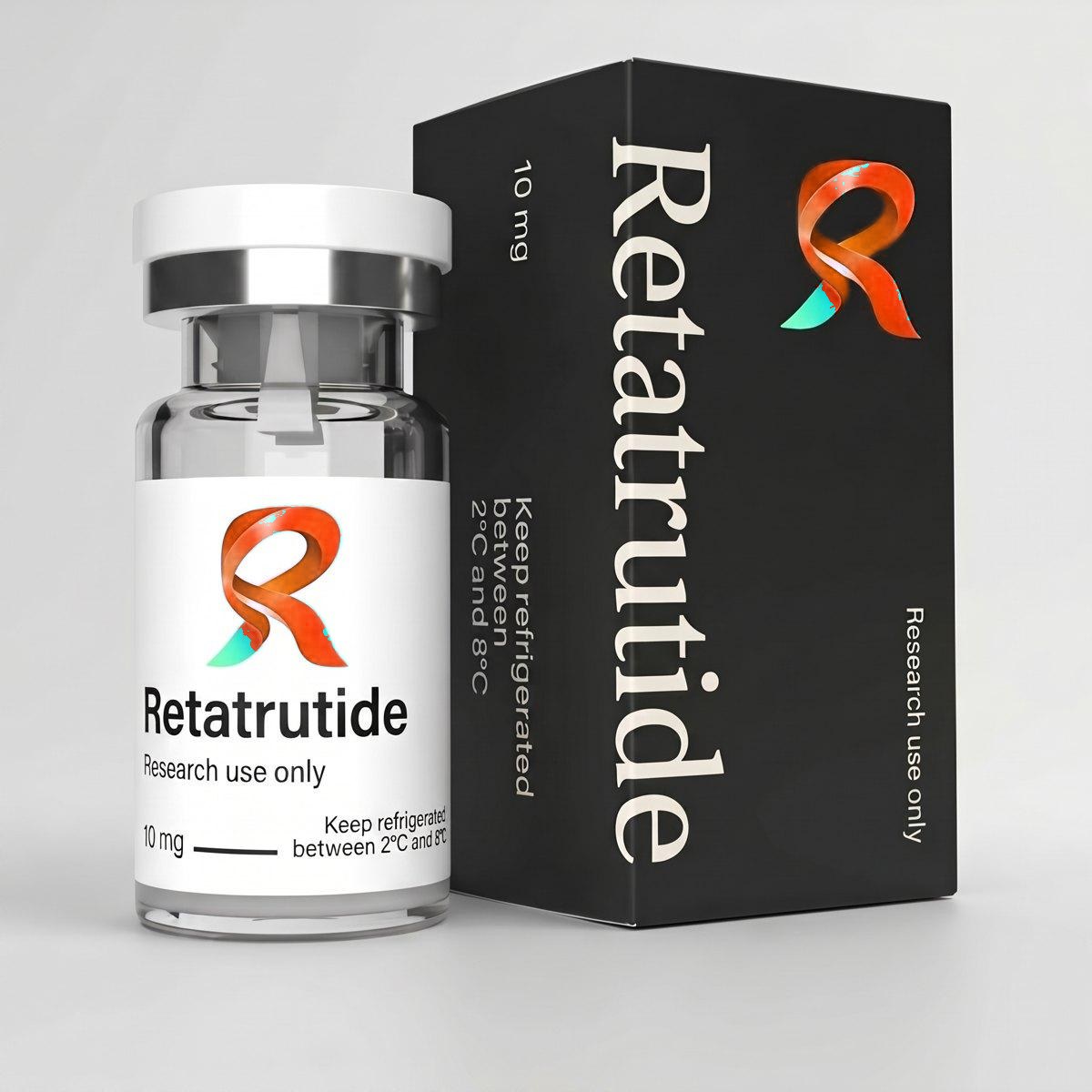
Retatrutide has not received FDA approval. As an investigational triple agonist targeting GIP, GLP-1, and glucagon, it is obtainable—where legally offered—only as a compounded formulation prescribed by a licensed clinician. The values provided below represent study population averages, not forecasts for any single person.
Retatrutide Half-Life: The Short Answer
- Reported half-life: roughly 6 days, according to published pharmacokinetic data.
- Dosing interval: a once-weekly subcutaneous shot, since the drug is eliminated slowly.
- Time to steady state: roughly 4 to 5 weeks while the dose remains unchanged.
- Near-complete clearance: approximately 4 to 5 half-lives, meaning about 24 to 30 days following the final injection.
- Status: still investigational, not FDA-approved, and available only under a prescriber's oversight.
Retatrutide Pharmacokinetics in Plain Language
Pharmacokinetics is the study of how a drug moves through the body: absorption, distribution, metabolism, and excretion. Half-life is one measure within that discipline—the time it takes for the drug's blood concentration to drop by 50%.
Picture 100 units in the bloodstream. After one half-life, roughly 50 units are left; after a second, about 25. The decline is proportional rather than linear: each period eliminates half of whatever remains. As a result, the amount never hits absolute zero but eventually falls below levels that matter clinically.
Uptake after a subcutaneous injection
Human trials published to date gave retatrutide by subcutaneous injection. The drug moves gradually from the injection site into the bloodstream, so blood levels climb over a day or longer instead of spiking right away. Structural changes to the molecule slow its breakdown and keep it circulating longer, which explains the reported extended half-life. Our overview of what retatrutide is covers the receptor mechanism.
Why an extended half-life supports once-weekly dosing
With a half-life around six days and a dosing gap of seven days, approximately half of the prior dose is still present when the next is administered. Levels accumulate slowly over several weeks before plateauing, avoiding the sharp highs and lows typical of shorter-acting drugs. A qualified clinician relies on this arithmetic when setting up a weekly titration plan.
How Long Does Retatrutide Remain in the Body?
Using the reported six-day half-life, the table below estimates how much of a final dose is left as time passes. These are modeled figures derived from standard elimination math with the reported values; actual results can differ from person to person.
| Half-lives elapsed | Approximate days | Approx. % cleared | Approx. % remaining |
|---|---|---|---|
| 1 | ~6 days | ~50% | ~50% |
| 2 | ~12 days | ~75% | ~25% |
| 3 | ~18 days | ~88% | ~12% |
| 4 | ~24 days | ~94% | ~6% |
| 5 | ~30 days | ~97% | ~3% |
Reading the retatrutide duration table accurately
In pharmacology, four to five half-lives are generally considered full elimination, so retatrutide clears in approximately three to four weeks after the last injection. This is a theoretical benchmark, not a clinical promise: appetite suppression and side effects may resolve on their own schedule.
Retatrutide Steady State: Why Dose Changes Take Weeks
Steady state occurs when the amount of drug entering the body each week matches the amount being eliminated. Blood levels level off and follow a weekly rhythm. Given the reported six-day half-life and weekly injections, steady state is usually achieved in about four to five weeks—the same calculation run in reverse.
A frequent misunderstanding is that raising the dose produces its full effect right away. In fact, the effect accumulates over about a month. Titration protocols keep a dose steady for several weeks to properly evaluate both benefits and tolerability, which is why the results timeline the process stretches across months, not days.
Factors That May Alter How Retatrutide Is Exposed in the Body
The half-life value listed for a medication reflects an average across a population. Individual exposure can be influenced by a range of variables, even though published details specific to retatrutide remain limited.
- Body weight and composition: When the volume of distribution is larger, any given dose ends up diluted across a greater space, so blood levels are lower.
- Injection site and depth: Absorption from subcutaneous tissue can differ depending on how deep the injection is placed, as shown in pharmacokinetic research.
- Kidney and liver function: Impaired kidney or liver function could alter the way peptide drugs are eliminated from the body.
- Dose level: Greater doses produce greater exposure, while the titration plan determines how soon a plateau is achieved.
- Compounded product variability: Not every pharmacy offers the same concentration or formulation.
- Concurrent medications: Because retatrutide delays gastric emptying, taking other oral drugs at the same time could affect how those medications are absorbed.
Storage and handling
Improper storage can degrade the peptide, altering the dose actually delivered regardless of what the label states. Refrigeration and expiration guidance from the pharmacy should always be followed.
Clinical trials for retatrutide are ongoing. The figures cited here come from early published research and may be revised once larger trials are available.
Retatrutide Half-Life Pharmacokinetics: FAQ
What is retatrutide's half-life?
Findings from phase 1 and phase 2 trials indicate an elimination half-life of roughly six days for the drug, supporting a once-weekly subcutaneous injection schedule. Outcomes can differ from person to person.
After the final dose, how long does retatrutide remain in the body?
Based on the reported half-life, roughly 94-97% would be eliminated within 24-30 days, equal to four to five half-lives, a span generally regarded as complete elimination.
How long until retatrutide reaches steady state?
With an unchanged weekly dose, steady state is reached in about four to five weeks. Raising the dose resets the accumulation period at the new level.
Does a 6-day half-life equal the duration of the drug's effects?
No. Blood levels of the drug and its clinical effects are linked but not the same thing. Appetite changes and side effects may persist longer or resolve sooner on a separate timeline.
Does the half-life mean missing a dose for a week is harmless?
It means that, in the published pharmacokinetic data, measurable drug levels persist between weekly doses. Each clinical trial protocol set its own rules for how late a dose could be administered.
Is retatrutide FDA-approved?
No. It has not received regulatory approval and, where obtainable, exists only as a compounded product prescribed by a licensed physician.
Research-grade · COA per lot