


Search interest in retatrutide for diabetes has climbed sharply, since the very hormone pathways that produce weight loss also play a key part in controlling glucose. Retatrutide is an investigational compounded peptide and has not received FDA approval for diabetes, weight loss, or any other condition. In the U.S., it can be obtained only via licensed prescribers and compounding pharmacies, and nothing here constitutes medical advice.
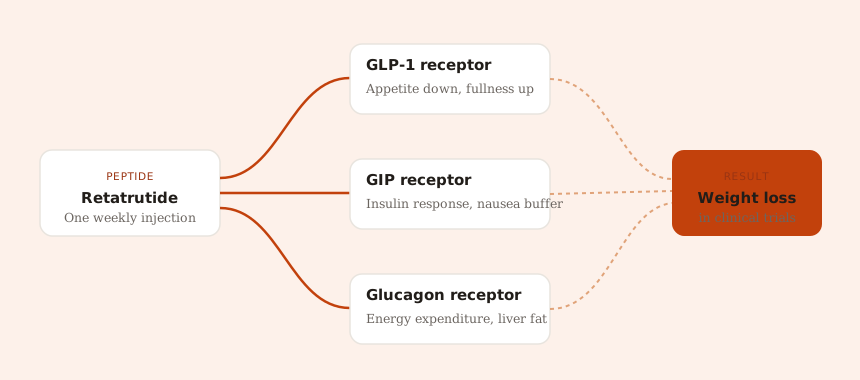
Quick orientation: Retatrutide acts on three receptors: GLP-1, GIP, and glucagon. Of these, two are strongly associated with a stronger insulin response and lower blood glucose. Phase 2 trials enrolled adults with type 2 diabetes and reported meaningful A1c reductions. Retatrutide is not insulin, is not established for type 1 diabetes, and holds no approved place in diabetes treatment.
The investigational status matters greatly in this context, since people with diabetes frequently take other glucose-lowering drugs, which changes the risk profile. The decision belongs to a clinician who can review your full medical history.
Can retatrutide reduce blood sugar? What diabetes research shows.
Retatrutide is categorized as a triple agonist one molecule that engages three receptors, each with a separate influence on metabolism. How each component works clarifies why scientists expected glycemic effects, and why the third one initially raised concerns.
The three receptor pathways
| Receptor pathway | Its metabolic actions | Expected effect on glucose |
|---|---|---|
| GLP-1 | Prompts insulin release in a glucose-dependent manner, lowers glucagon after eating, delays gastric emptying, reduces appetite | Brings down both post-meal and fasting glucose |
| GIP | A second incretin signal; increases insulin secretion following meals and influences fat handling in adipose tissue | Aids insulin response; may indirectly enhance sensitivity |
| Glucagon | Raises energy use and releases stored fat, including liver fat; on its own, drives glucose production by the liver | On its own it lifts glucose, but in combination that effect is offset |
Why the glucagon component seems paradoxical
Glucagon raises blood sugar when levels drop, so pairing a glucagon agonist with a weight-loss drug looks contradictory. The leading explanation is that the two incretin arms govern glucose control: the insulin-promoting actions of GLP-1 and GIP, together with considerable weight loss and less liver fat, seem to cancel out glucagon's tendency to raise glucose. Across the phase 2 program, glycemic results overall were favorable. This balance reflects trial-level findings, not a promise for any one person, and long-term effects are still being studied.
What phase 2 data show for retatrutide and type 2 diabetes
One separate phase 2 trial enrolled adults with type 2 diabetes, not merely obesity. That group experienced substantial A1c reductions together with weight loss, and the biggest effects generally appeared at higher doses. We deliberately leave out percentage figures here, because numbers circulated on social media often come from unreliable sources.
Comparison with approved medications
The key difference is regulatory, not simply pharmacological. Several GLP-1 medications are FDA-approved to treat type 2 diabetes and have accumulated years of outcome data. Retatrutide has none of that: no completed review, no approved diabetes labeling or dosing, and no post-marketing surveillance.
Can diabetics take retatrutide?
Prescribing choices belong entirely to a clinician, and many may choose not to. A doctor weighing it would need information on current medications, kidney and liver function, A1c, any history of hypoglycemia, and the ability to monitor glucose at home. Retatrutide must never take the place of a prescribed diabetes medication, and patients should not stop or change existing prescriptions on their own.
Retatrutide and insulin resistance
Insulin resistance occurs when muscle, liver, and fat cells respond poorly to insulin, pushing the pancreas to release more of it to keep glucose steady. It comes before type 2 diabetes.
Can retatrutide affect insulin resistance?
Markers such as fasting insulin were reported to improve, yet the mechanism warrants cautious reading. Much of the benefit credited to any incretin drug in this setting likely stems from the weight loss itself (particularly loss of visceral and liver fat) rather than a direct action on insulin signaling in muscle. Retatrutide's glucagon component may help lower liver fat, which forms part of the wider effect metabolic benefits observed in trials. Whether that translates into lasting gains in insulin sensitivity beyond what weight loss alone produces remains uncertain.
Retatrutide and type 1 diabetes
Type 1 diabetes stands apart as its own disease: the immune system attacks the insulin-producing beta cells, leaving the body with virtually no capacity to produce meaningful insulin. Incretin medications generally rely on boosting output from beta cells that still function, a mechanism with almost nothing to act on once those cells are gone.
Insulin cannot be replaced by retatrutide
There is no proof, extensive research, or approval behind retatrutide for type 1 diabetes. It is not a substitute for insulin therapy, and cutting back or quitting insulin is dangerous and can trigger diabetic ketoacidosis. On rare occasions, specialists may prescribe approved incretin drugs off-label to type 1 diabetes patients who also live with obesity, but only under strict medical supervision. That scenario does not apply to a compounded investigational peptide.
Hypoglycemia warning. The effect retatrutide has on blood sugar depends largely on glucose levels, yet combining it with insulin or a sulfonylurea (glipizide, glimepiride, or glyburide, for example) sharply increases the risk of low blood sugar, which can be severe. Dose changes are frequently needed for these medications, and only the prescribing clinician should make them. Learn the warning signs (shakiness, sweating, confusion, palpitations), keep fast-acting carbohydrate within reach, and get urgent care for severe episodes.
Supervision, monitoring, and the question "can retatrutide cause diabetes"
Because retatrutide overlaps with diabetes care, it demands closer supervision than when it is used for weight alone: most of the interaction danger comes from the other drugs in the regimen, not from retatrutide by itself.
Frequently asked questions
Has retatrutide received approval for diabetes?
No. Retatrutide remains investigational and has no FDA approval for type 2 diabetes, type 1 diabetes, weight loss, or any other indication. Compounded forms are dispensed only under the direction of a licensed prescriber.
In people without diabetes, does retatrutide bring blood sugar down?
Trials reported in adults with obesity demonstrated gains in glucose-related measures, which mostly tracked alongside weight loss. Because the incretin effect depends on glucose levels, symptomatic low blood sugar is less frequent in those not using insulin or sulfonylureas, although it can still occur.
Will the dose of my insulin or sulfonylurea have to be adjusted?
It may be. When an incretin-based drug is added, insulin or sulfonylurea doses often need to be reduced to avoid hypoglycemia. Only the prescriber should make this adjustment, with monitoring in place, and never on your own.
How does the glucagon component keep from pushing my blood sugar up?
The standard explanation is that at the doses tested, the GLP-1 and GIP components, together with reductions in weight and liver fat, outweigh glucagon's tendency to elevate glucose. This is a reflection of overall trial results, not a promise about any one person's glucose levels.
Could a person with type 1 diabetes take retatrutide?
Its use in type 1 diabetes is neither established nor approved, and it cannot stand in for insulin. Anyone with type 1 diabetes should be under an endocrinologist's care.
Research-grade · COA per lot