


For the question that gets searched every day, the short answer is negative: an oral version of retatrutide does not exist. Retatrutide is an investigational peptide and across all human studies conducted to date, administration has been through a subcutaneous injection taken once per week. Within the United States, no pharmacy, telehealth service, or compounding laboratory is legally permitted to supply an FDA-approved retatrutide pill, tablet, capsule, or sublingual drop, since no product of that kind has ever received approval or undergone clinical validation. Any item sold online under those labels is an unregulated product whose composition is unknown.
Understandably, this leaves many people disappointed: among the drawbacks most frequently mentioned for this drug class, the weekly injection tops the list. It therefore makes sense to walk through why the chemistry involved makes retatrutide pills difficult to produce, and how to evaluate the 'retatrutide oral drops' that are being promoted at present.
Oral retatrutide at a glance
- In every piece of published human research, retatrutide is administered as a weekly subcutaneous injection.
- For retatrutide, no oral version, tablets, capsules, or sublingual drops have been granted FDA approval.
- Stomach acid and digestive enzymes break peptides down, and these molecules cross the intestinal wall only poorly.
- For certain peptides, oral delivery can work technically, though it demands specialized formulation technology.
- What is sold online as 'retatrutide pills' or 'oral drops' is unregulated and unverified.
- Retatrutide is still investigational, and no form of it holds FDA approval.
Does a pill form of retatrutide exist?
No. Retatrutide belongs to the synthetic peptide category, an amino acid chain designed to hit three receptors simultaneously (GIP, GLP-1, and glucagon). A peptide of this size is not built to survive the digestive tract, and no oral formulation of retatrutide has ever been created. In studies, it is given subcutaneously, a route that lets it reach the bloodstream intact and clear slowly enough to permit once-weekly dosing according to the drug's half-lifehalf-life. Only the injectable route has evidence behind it.
Is an oral retatrutide in development?
No publicly confirmed oral retatrutide program has come to our attention, and we will not engage in speculation. It is true that drug developers sometimes investigate alternative delivery methods for injectables that succeed, so oral triple-agonist formulations could potentially be studied down the road. However, 'possible someday' does not equal 'available now.' Until a manufacturer releases data and a regulator evaluates it, patients have nothing to take.
What about retatrutide tablets made by a compounding pharmacy?
Compounding pharmacies work from what a licensed prescriber orders and what can be prepared safely and consistently. Making an oral tablet from a peptide without a proven absorption-enhancing formulation does not produce a usable medicine; most of the active ingredient would be destroyed before it could take effect. A legitimate provider will not offer retatrutide tablets, and receiving such an offer is itself a red flag.
Why oral administration of peptides is hard
Your digestive system does its job with great efficiency, and that job is breaking down proteins. For a peptide drug, this is precisely the obstacle.
Two obstacles exist
First, enzymatic degradation. Stomach acid and proteases such as pepsin and trypsin split peptide chains into fragments and single amino acids. When a drug depends on its exact sequence and folded shape to bind a receptor, losing that shape means losing activity.
Second, poor permeability. Anything that survives digestion still has to pass through the intestinal lining. Peptides are comparatively large, hydrophilic molecules that cross this barrier inefficiently. Consequently, an unmodified peptide typically shows oral bioavailability below one percent, which is too low and too inconsistent for dependable dosing.
The exception that proves the rule
Oral peptide medication is no longer imaginary. An oral semaglutide product exists on the market, pairing the peptide with an absorption enhancer and strict usage requirements: an empty stomach, a small quantity of water, and a waiting period before eating. Bringing it to market demanded years of formulation work and extensive clinical trials, and the oral dose is far higher than the injection to compensate for losses. That is the benchmark, and retatrutide has not been through any comparable process.
Injection vs. so-called oral retatrutide offerings
Below is how the actual evidence compares between the route used in studies and the products marketed as retatrutide in pill or drop form.
| Factor | Subcutaneous injection | 'Oral' capsules, pills, or liquid drops |
|---|---|---|
| Human evidence | The administration method employed in peer-reviewed clinical trials | None identified |
| Absorption | Circumvents the digestive system; the peptide reaches the bloodstream intact | Not studied; peptide molecules tend to degrade within the gastrointestinal tract |
| Dosing control | A measured dose expressed in units, set and fine-tuned by a physician | The amount actually delivered remains unknown; there is no method to verify what gets absorbed |
| Purity and content | Compounded by a licensed pharmacy against a valid prescription | Unconfirmed; ingredients, purity, and labeling undergo no independent verification |
| Regulatory status | Investigational; lacks FDA clearance; intended only for use under professional supervision | Not approved; sold outside the legitimate distribution chain |
| Oversight | Clinical assessment, ongoing monitoring, and adjustments to dosage | Typically none |
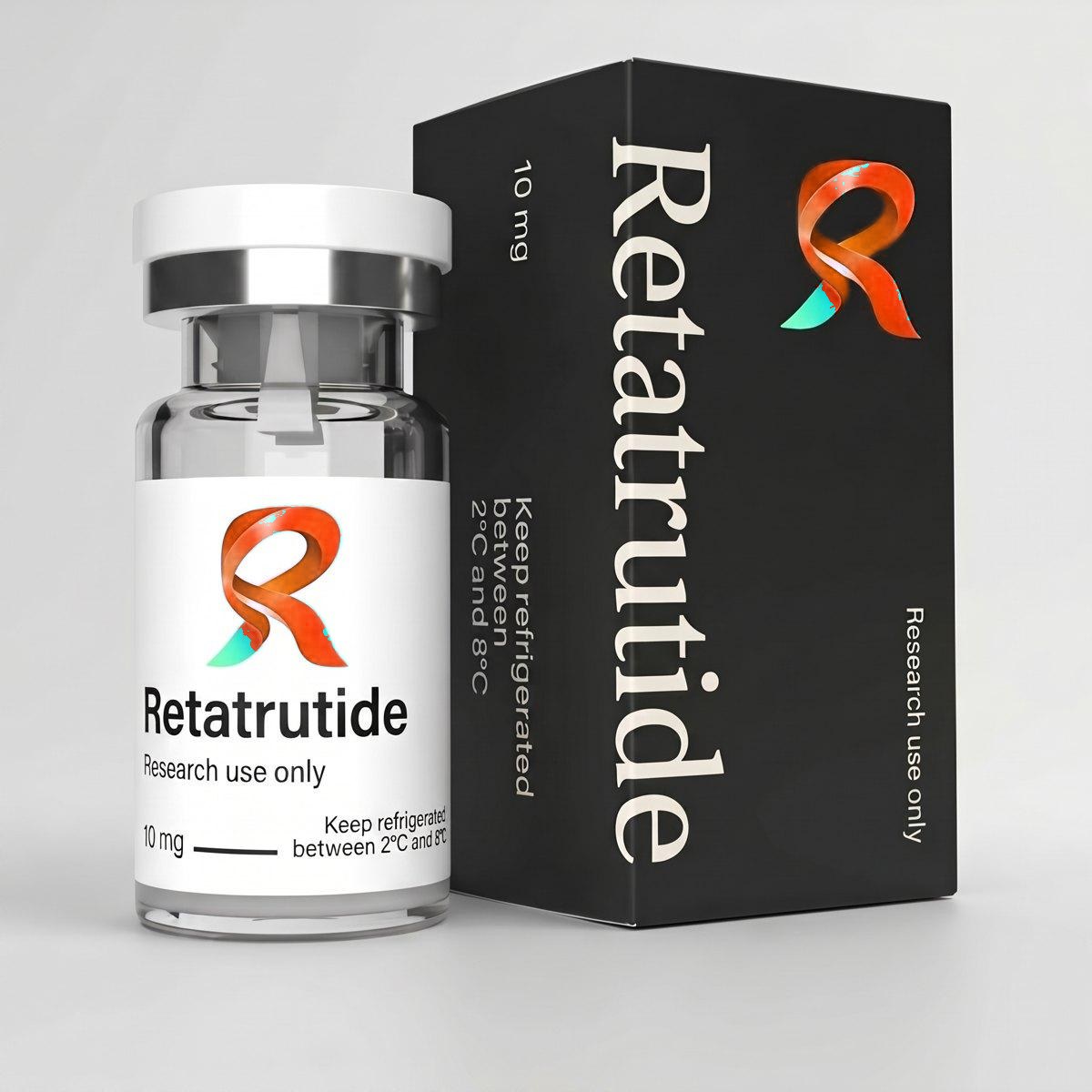
Caution: Products marketed as 'oral retatrutide,' 'retatrutide drops,' or 'retatrutide pills' on websites, via social media sellers, or from research-chemical vendors operate without regulation. No published research shows they are absorbed, their contents cannot be confirmed, and no reliable dosing information exists. In the best case, you lose money on something that does nothing. In the worst case, you ingest an unknown substance.
What legitimate access really involves
If retatrutide is appropriate for you at all, it will come through a licensed healthcare provider after a genuine medical evaluation—not from an online shopping cart. A clinician reviews your medical history, makes clear that the drug is experimental and not FDA-approved, and manages your dosing. Our guide on how legitimate sourcing works explains what to verify before handing over payment details.
Essential questions for any seller
Ask whether a licensed prescriber is involved, where the product is made, and what evidence is supplied. A vendor selling a retatrutide peptide pill cannot answer the most basic question—how much of the active ingredient is actually absorbed—because no one has measured it.
Oral retatrutide FAQ
Is oral retatrutide available from any source?
Not from any legitimate source. No FDA-approved or clinically validated oral retatrutide product exists. Anything sold under that label falls outside the regulated market.
Do retatrutide oral drops or sublingual forms actually work?
No published data show that sublingual or oral drop versions of retatrutide are absorbed in meaningful or consistent amounts. Marketing claims from sellers do not constitute proof.
If oral semaglutide exists, why isn't retatrutide available as a pill?
An oral form of semaglutide required a specially engineered formulation with an absorption enhancer and a large set of clinical trials. That research has not been conducted or published for retatrutide, so this comparison illustrates what is needed rather than what is currently on the market.
Are retatrutide pills safer than injections just because they aren't syringes?
No. Steering clear of a syringe does not make an unverified product safe. An unregulated pill may contain unknown ingredients and uncertain dosages, which presents a greater danger than a physician-supervised subcutaneous injection.
If I already bought retatrutide pills online, what should I do next?
Stop taking the product right away and speak with a licensed medical professional about your goals and the choices open to you. Take the packaging and all labels to that visit.
Retatrutide is still being studied and has not received FDA approval for weight loss or any other purpose. It should only be used under the supervision of a licensed medical professional. The content on this page is general information, not medical advice, and cannot replace an appointment with a qualified physician.
Research-grade · COA per lot