


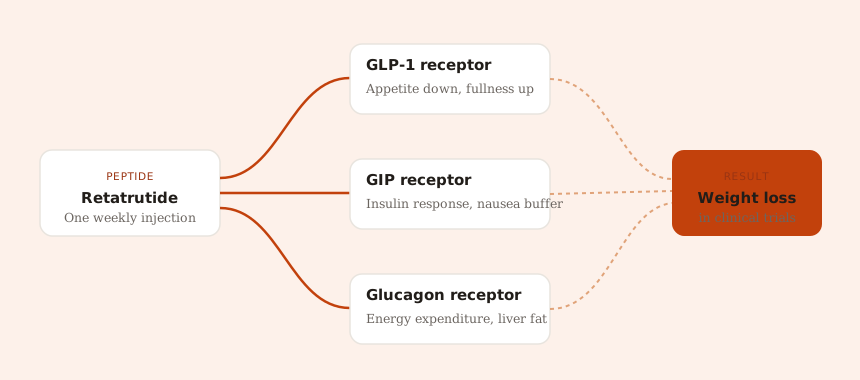
What is retatrutide, exactly? It is an investigational peptide given as a once-weekly injection, under study as a treatment for obesity and associated metabolic conditions. It belongs to the same drug class as familiar GLP-1 medications, but rather than targeting one or two pathways, it activates three hormonal systems at the same time. In essence, retatrutide is a man-made molecule designed to mimic multiple hormones involved in appetite and metabolism, reducing hunger, slowing gastric emptying, and influencing how the body utilizes and stores energy. It must be emphasized from the start that retatrutide is not FDA-approvedWithin the United States, it can only be obtained as a compounded drug from a licensed pharmacy, used under a healthcare provider's supervision, and should never be acquired or used without medical oversight.
Because it is still being studied, most knowledge comes from phase 2 trials rather than real-world experience. This article provides a plain-language overview of what the drug is, how it works, its classification, and which patient populations are being studied.
What are the effects of retatrutide, and why is it called a triple agonist?
To understand how retatrutide works, one must first look at the hormones it targets. Most currently available weight-loss injections are single or dual agonists. A single agonist, like semaglutide attaches to only one receptor (GLP-1). A dual agonist, such as tirzepatide, activates two (GLP-1 and GIP). Retatrutide goes a step further as a triple agonist that binds to three receptors at once: GLP-1, GIP, and glucagon.
Simplifying the three targets
GLP-1 (glucagon-like peptide-1)
This signaling cascade reduces appetite, slows gastric emptying, and helps regulate blood sugar after meals. It is the main mechanism behind many modern weight-loss drugs.
GIP (glucose-dependent insulinotropic polypeptide)
GIP works together with GLP-1 to boost insulin secretion and may enhance the body's processing of fats and carbohydrates. The inclusion of GIP activity is what sets dual agonists apart from single agonists.
Glucagon receptor activity
This is the key element that makes retatrutide a triple agonist. Activating the glucagon receptor may increase energy expenditure (approximately, the calories burned at rest), potentially offering an additional metabolic benefit on top of appetite reduction. This third mechanism is why some informally call it a GLP-3 or GLP3 retatrutide agent, though 'GLP-3' is a common nickname, not an official receptor name.
Step-by-step: How retatrutide works
The retatrutide mechanism of action combines appetite suppression with a potential metabolic boost. Below is how researchers describe its possible effects in the body during a treatment course. It's worth noting that retatrutide isn't the only choice; our comparison of next-generation metabolic peptides positions it alongside tesamorelin, survodutide, and the amylin analogs.
It imitates natural gut hormones
Following injection, the peptide attaches to GLP-1 and GIP receptors, signaling the brain and digestive tract to reduce hunger and increase satiety after meals.
It slows digestion
By slowing stomach emptying, food stays in the stomach longer, which may help a person feel satisfied with smaller portions and reduce overall calorie intake.
It triggers the glucagon pathway
Glucagon receptor activity may increase resting energy expenditure and influence how the liver handles fat—a mechanism thought to contribute to the significant weight loss seen in clinical trials.
It supports blood-sugar regulation
The combined effects of GLP-1 and GIP can improve glucose control, which is why researchers are also testing it in people with type 2 diabetes.
The overall effect seen in trials is reduced appetite plus a possible rise in energy expenditure. More information is available about the specific weight-loss results reported in clinical research on our dedicated page.
How is retatrutide classified, and is it a peptide?
A common question is whether retatrutide is a peptide. Yes, retatrutide is a synthetic peptide, meaning it is a chain of amino acids engineered to bind to specific hormone receptors. So when people ask "what is retatrutide peptide," they are correctly describing its chemical nature: it is an investigational peptide-based drug, not primarily a small-molecule pill.
Does retatrutide fall under the category of GLP-1 drugs?
A lot of people ask whether retatrutide counts as a GLP-1. The honest answer: it depends on how you define it. It does attach to the GLP-1 receptor, which means it shares that action with medicines like semaglutide. But calling it just "a GLP-1" misses a big part of the picture, since it also acts on GIP and glucagon receptors. A more accurate label would be a triple agonist that works on GLP-1, GIP, and glucagon not a straightforward GLP-1 medication.
| Agonist type | Receptors targeted | Example |
|---|---|---|
| Single agonist | GLP-1 | Semaglutide |
| Dual agonist | GLP-1 + GIP | Tirzepatide |
| Triple agonist | a combination of GLP-1, GIP, and glucagon activity | Retatrutide (investigational) |
If you are weighing your choices, our breakdown of retatrutide vs tirzepatide covers how the triple agonist and the dual agonist differ in their mechanism of action and in the outcomes that have been reported.
The half-life of retatrutide and why it is dosed once a week
Retatrutide has a half-life of roughly six days, which explains why researchers study it as a once-weekly injection. Because it stays in the body for an extended period, the drug remains active long enough to keep its effects steady between doses, so study volunteers typically receive one shot every seven days rather than a daily injection.
The reason the dosing plan is built up slowly
During clinical trials, retatrutide is not started at the full dose. Instead, the amount is raised gradually over a number of weeks (a stepwise process called titration) so the body can adjust and the chance of nausea and other gastrointestinal side effects is reduced. This step-by-step approach is standard for medicines in this class. A general overview of how the weekly dosing schedule is usually structured can give you more detail on the titration steps.
Who makes retatrutide, and what forms of it exist?
Eli Lilly and Company is the developer of retatrutide, the same firm behind a number of established metabolic therapies. At this point, the drug is still investigational and is being tested in late-stage clinical trials; it has not been approved by the FDA, and no brand-name or approved version is available by prescription. That difference matters a great deal for anyone looking into the retatrutide drug: what you may come across in the US is a compounded compounded preparation, not a commercially available FDA-approved product.
Compounded retatrutide and how it compares with other forms
When a licensed compounding pharmacy prepares the medication for a particular patient who has a valid prescription, that is compounded retatrutide. Because the injectable peptide is the most studied form, compounded versions are typically administered as a weekly subcutaneous injection.
What about oral retatrutide?
Many people are curious about an oral retatrutide because taking a pill would be easier than getting an injection. But peptides are generally hard to deliver by mouth, and nearly all research so far has focused on the injectable version. Any claims about an oral form should be treated with skepticism, and a licensed provider is the right person to verify what is legitimately available.
Comment on safe sourcing
If you and your clinician conclude that this route is appropriate, the medication should be obtained only through legitimate sources. Learn how to access retatrutide through a licensed provider and pharmacy instead of from unverified sellers.
In research, what is retatrutide being studied for?
When someone asks "what is retatrutide used for," the accurate answer is that it is still under investigation (not yet approved), primarily for chronic weight management in adults who have obesity or overweight, and for related conditions such as type 2 diabetes. Scientists have also looked at its impact on metabolic markers and fatty liver. In its most frequently cited phase-2 trial, participants taking the highest dose achieved an average body-weight reduction of up to about 24% at 48 weeks; these are trial results from the research literature and should not be viewed as a promise of individual outcomes, which differ greatly and depend on many variables.
Because retatrutide is still investigational, it should only be used within a structured program that includes diet, physical activity, and monitoring for side effects. Anyone considering it should review the full picture, including possible side effects reported during treatment with a qualified healthcare provider before starting.
Frequently asked questions
How would you describe retatrutide in everyday terms?
It is a peptide made in a laboratory that is still being studied and is given as a weekly injection. It works by imitating several hormones that regulate appetite and metabolism. It is under research for weight management and has not been approved by the FDA.
When it comes to retatrutide, does it belong purely to the GLP-1 class, or does its profile extend further?
Beyond its action at the GLP-1 receptor, this compound also binds GIP and glucagon receptors, earning it the label of triple agonist. Calling it merely a GLP-1 drug therefore falls short of the full picture.
Where does the informal label "GLP-3 retatrutide" come from?
Some observers use "GLP-3" as a casual shorthand, since retatrutide hits a third receptor alongside GLP-1 and GIP. This is not a formally recognized receptor designation.
How long does retatrutide stay active in the body, and what does its dosing schedule look like?
With a half-life of roughly six days, retatrutide is investigated as a once-weekly injection, typically titrated upward gradually while a medical professional oversees treatment.
Can compounded retatrutide be considered the same as an approved pharmaceutical?
Certainly not. Compounded retatrutide is prepared by a licensed pharmacy for an individual patient. Because no FDA-approved commercial formulation exists at this point, oversight by a licensed provider is essential.
Who makes retatrutide?
Eli Lilly and Company is behind retatrutide, which remains an investigational drug in late-stage clinical trials.
Research-grade · COA per lot