


Most individuals searching for retatrutide results share a single goal: a realistic picture of how much weight this investigational peptide could help them shed, and how quickly. Retatrutide is an experimental, compounded triple-agonist medication that certain telehealth providers prescribe under clinician supervision. It is not FDA-approved not approved for weight management or any other use, and the numbers listed below are drawn from early-stage research, not assured results. Individual responses vary greatly, and this page is for educational purposes only—it does not promise what you personally will experience.
Retatrutide is still investigational and can only be obtained through a licensed provider as a compounded product. It has not been approved by the FDA. Nothing on this page should be taken as medical advice, and no particular outcome is guaranteed. Always speak with a qualified clinician about your full medical history and all medications before starting.
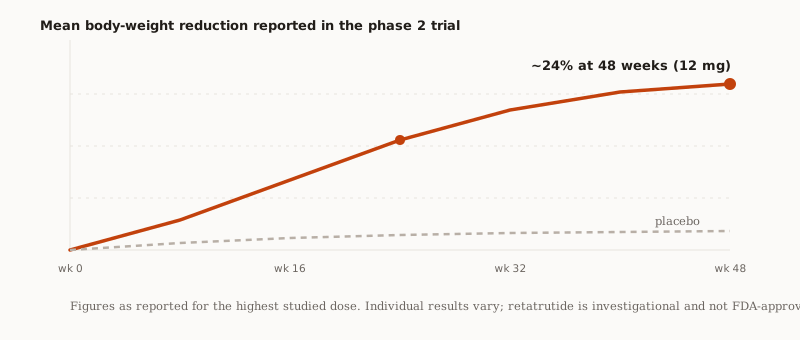
- Average body-weight reduction reported: up to about 24% at 48 weeks (highest dose, phase 2, as documented)
- Approximate half-life: roughly 6 days, which permits once-weekly dosing
- Time to elimination: around 5 half-lives (approximately 30 days) following the last dose
- How it works: activates three receptors (GLP-1, GIP, and glucagon)
In what way does retatrutide drive weight loss?
Understanding retatrutide's results starts with understanding its design. Whereas older medications act on one or two gut hormone pathways, retatrutide is a single molecule reported to stimulate three receptors simultaneously: GLP-1, GIP, and glucagon. This 'triple agonist' action is the reason researchers have been studying it, and it is key to the pharmacology behind it.
The triple-agonist mechanism
The GLP-1 and GIP actions are believed to suppress appetite, delay stomach emptying, and increase satiety after eating, so individuals frequently eat less without having to try constantly. The glucagon element makes it different: activating the glucagon receptor may increase energy expenditure and aid fat metabolism. Theoretically, this combination links lower calorie intake with a modest rise in calories burned.
Does retatrutide target fat specifically, or muscle as well?
A common worry is whether the weight lost comes from fat or from lean tissue. Any rapid weight loss, no matter the method, can include some muscle loss. The glucagon pathway is one reason scientists are examining retatrutide's potential fat-specific effects, but this remains under investigation and is not yet confirmed. Adequate protein intake and resistance training are widely advised to protect muscle during weight loss, regardless of medication use. Talk over body-composition goals and the possible benefits with a qualified clinician.
Retatrutide clinical trials results
The most commonly cited retatrutide weight-loss results come from a phase 2 randomized trial in adults with obesity. According to the report, those receiving the highest weekly 12 mg dose experienced an average body-weight reduction of nearly 24% at 48 weeks, while lower doses produced smaller average losses. These numbers are averages from a controlled research setting and are still early-stage; larger, longer phase 3 trials are required to confirm both efficacy and long-term safety.
The study numbers reflect group averages under research conditions, including medical oversight and stepwise dose increases. They are offered as published evidence, not as a forecast for you. Your result could be greater, smaller, or negligible, since individual responses differ.
How to interpret trial data responsibly
A 'mean' reduction means some participants lost more and others lost much less. Averages also include those who tolerated the drug well enough to stay in the study. When you see a headline percentage, treat it as a best-case scenario under ideal, supervised conditions—not as a target. This is crucial when reading patient before-and-after reviews stories, which are anecdotal and cannot replace clinical data.
Retatrutide weight-loss timeline: what to expect week by week
No fixed schedule exists, but the table below shows a typical, illustrative pattern of how a supervised regimen is often structured and what some people might notice. It is intended only as an example. Providers raise the dose gradually to improve tolerability, so the early weeks are about adjustment rather than rapid change. Individual results vary, and some may see little effect until later or hit a plateau sooner.
| Timeframe | Typical focus | What some users report (varies) |
|---|---|---|
| Weeks 1-4 | Lowest starting dose; body adjusting | Feeling less hungry and taking smaller portions; little or no change on the scale yet; possible early stomach discomfort. |
| Weeks 5-8 | Increase the dose for the first time as directed by the clinician. | Increased satiety and earlier signs of gradual weight change may become noticeable. |
| Weeks 9-16 | Keep increasing the dose step by step until the target level is reached. | Many people notice a more evident and consistent weekly reduction; daily habits start to settle. |
| Months 4-6 | Are approaching or have achieved the target dose. | Often the most pronounced combined effects; a temporary plateau can happen for some individuals. |
| Months 7-12 | Maintenance dose together with lifestyle recommendations. | For certain individuals, slower and ongoing change; the emphasis shifts to maintaining results. |
Weekly weight reduction associated with retatrutide therapy.
A frequent question is whether a predictable weekly figure exists. In practice, weekly changes are irregular: minimal at first, faster during the middle titration phase, and slowing as the body adapts. Expecting a specific weekly number often results in frustration. A gradual, sustainable rate considered safe by a medical professional is more meaningful than the reading from any single week, since that can vary due to water, salt, and hormonal shifts. Only your clinician determines and adjusts your weight-loss dose.
How soon do the effects of retatrutide become noticeable, and how long do they last?
Two common questions arise: how quickly does retatrutide start working, and how long before it takes effect. These are separate. Appetite effects may appear fairly soon, sometimes within the first couple of weeks, because the drug acts on appetite centers shortly after dosing begins. Visible weight changes, however, usually lag and become more noticeable within the first two to four months as the dose is increased.
How long does retatrutide stay in the body?
The estimated half-life of retatrutide is about 6 days, which is why it is intended for once-weekly dosing. As a general rule, a medication is largely eliminated after about five half-lives, so retatrutide may take around 30 days to be mostly cleared after the last dose. This is an approximation; the exact duration depends on individual factors, and only a qualified medical provider can advise on timing for procedures, pregnancy considerations, or other drugs.
Why am I not losing weight on retatrutide?
Hitting a weight plateau or having a low response is common and does not automatically mean the treatment is ineffective. Weight loss is rarely a straight line, and various ordinary factors can mask progress. Below are points to discuss with a qualified provider before drawing any conclusions.
What to assess with a medical professional
- Dose and titration stage: Early low doses are not expected to produce significant loss; you may still be in the initial stages.
- Adherence and timing: Missing doses or inconsistent weekly use reduces the effect.
- Calorie and protein intake: Decreased appetite only helps if it results in a sustained calorie deficit; caloric drinks and larger portion sizes can add up.
- Sleep and stress: Not enough sleep and high stress can hinder progress.
- Variations due to water, sodium, and the menstrual cycle: These can obscure fat loss on the scale for days or weeks.
- Medical factors: Thyroid issues, other medications, and certain medical conditions can affect outcomes and require clinical evaluation.
When a weight plateau usually happens
As weight goes down, the body adapts and metabolism shifts, so a brief plateau after substantial early loss is common. A qualified clinician may recommend adjustments, but you should never change your dose on your own to try to accelerate results. Also, review any known risks and contraindications since your ability to tolerate the drug may determine whether the regimen can proceed as planned.
What to realistically expect and how lifestyle plays a role
When a healthcare provider considers it appropriate, retatrutide for weight loss should be viewed as a possible adjunct that works alongside nutrition, exercise, sleep, and consistency, not as a replacement for them. People who maintain the greatest long-term success in weight-management programs usually pair medication with habits they can sustain. Because retatrutide is investigational and compounded, ongoing medical supervision is essential for safety and for correctly interpreting your own progress over time.
Seek medical attention immediately if you develop severe or ongoing symptoms. Retatrutide is not appropriate for everyone; only a licensed clinician familiar with your medical history can assess eligibility, possible benefits, and risks.
Frequently asked questions
How soon does retatrutide begin to take effect?
Appetite changes might be noticed within the first few weeks, whereas more obvious weight changes generally appear over the first two to four months as the dose is slowly raised. This differs among individuals and is not guaranteed.
What results did retatrutide show in clinical trials?
In a phase 2 trial, the highest dose was linked to an average body weight reduction of up to about 24% at 48 weeks. These are group averages from early research conducted under medical supervision, not a prediction for any one person.
What is retatrutide's half-life?
The estimated half-life is about 6 days, which means it may take roughly 30 days (approximately five half-lives) for the drug to be mostly cleared after the last dose. Elimination varies from person to person; ask a qualified clinician about specific timing.
Does retatrutide burn fat?
Its activation of the glucagon receptor is one reason researchers are investigating its potential effects on energy expenditure and fat metabolism, but this remains under study. Getting enough protein and doing resistance training can help preserve muscle during any weight loss.
Why am I not losing weight while taking retatrutide?
Possible reasons include being early in the dose escalation, inconsistent dosing, not having a sufficient calorie deficit, sleep or stress issues, fluctuations in water weight, or underlying medical conditions. Talk these factors over with a qualified clinician instead of changing the dose on your own.
Are these results guaranteed?
No. Retatrutide is investigational and not FDA-approved, and no specific outcome is guaranteed. Individual results vary, and all numbers presented here are from clinical research for educational purposes. For comparison with an approved dual agonist, see our head-to-head comparison with tirzepatide and bear in mind that a full month of treatment carries its own monthly price tag.
Research-grade · COA per lot