


At present, all retatrutide doses given to patients in the US are compounded, since no branded FDA-approved version of this molecule is on the market. This core fact shapes every point covered here: where the medication comes from, who bears responsibility for its quality, and why the regulatory status of retatrutide compounding is still genuinely unclear.
Investigational: Retatrutide has not received FDA approval for weight loss or any other use.
Not reviewed: Before a compounded drug is dispensed, the FDA does not evaluate it for safety, effectiveness, or quality.
Licensed activity: State pharmacy boards regulate compounding pharmacies, and in some cases these pharmacies also register with the FDA.
Contested: The compounding of a molecule that has never been approved is a legal area in flux, not a settled matter.
What compounded retatrutide means, put simply.
In pharmaceutical compounding, a licensed pharmacy makes a medication for one individual patient under a valid prescription. Instead of a mass-produced vial arriving from a factory in its finished form, the pharmacist combines the active ingredient, diluent, and excipients into a preparation designed for a particular person.
Compounding is not some fringe activity; it existed before industrial manufacturing and is still routine for pediatric doses and sterile injectables. What sets this situation apart is the active ingredient itself. Retatrutide, a triple agonist still in clinical trials, means a compounded version is not a copy of an approved product; it is the only form in which the molecule is accessible to patients outside of research settings.
Prescription-only, by definition
A compounding pharmacy cannot fill an online order without clinical oversight. An evaluation and a prescription tied to a specific patient are required, so the real starting point is how a telehealth consultation and prescription actually work, not simply clicking add to cart.
503A versus 503B: the two types of retatrutide compounding pharmacies.
US law places compounders into two categories, and this distinction carries more weight than most promotional materials let on.
503A pharmacies
A 503A pharmacy makes patient-specific compounds based on individual prescriptions and is mainly licensed and inspected by its state board of pharmacy. It is not subject to the full federal current good manufacturing practice rules that govern drug manufacturers, and as a rule it cannot produce large batches for office stock or wholesale distribution.
503B outsourcing facilities
A 503B outsourcing facility registers with the FDA, may compound larger volumes without patient-specific prescriptions, and is expected to meet current good manufacturing practice standards under FDA inspections. This sets a higher bar for process control, although registration does not amount to approval of any product it makes.
Why this distinction shows up in your paperwork.
The category tells you who inspects the facility and which records you can request. If a provider cannot say which pharmacy it uses, that itself is revealing.
Registration, licensure, and inspection do not equal approval. No compounder, in either category, can produce a compounded preparation that is FDA-approved.
Can retatrutide be compounded? The straightforward regulatory answer.
Compounding as such is legal and regulated. The harder question is whether an investigational molecule with no approved reference product is a suitable candidate for compounding, and there is currently no definitive public answer. Federal law allows compounding from bulk substances under certain conditions, and precisely where those conditions begin and end is the heart of the debate.
What can be said with confidence: this is an unsettled, fast-moving area. Pharmacies and prescribers decide for themselves whether and how to proceed, and those decisions differ. Enforcement actions, state board policies, and legal cases can all shift the landscape. Anyone claiming the practice is clearly permitted or clearly prohibited is overselling what is publicly known. Our page on FDA approval status explains where the molecule stands in the trial process and what approval would mean.
Compounded retatrutide is not an FDA-approved medicine. The agency has not reviewed it for safety or effectiveness, and it should be used only under the care of a licensed healthcare provider.
Compounded, approved, and research-use-only are three separate categories.
The most common online misunderstanding is treating these three groups as interchangeable. They differ in oversight, who is accountable, and what recourse exists if something goes wrong.
| Aspect | FDA-approved drug | Compounded preparation | Research-use-only peptide |
|---|---|---|---|
| Prescription | Required for Rx products | Required, patient-specific | None; provided with no clinical oversight whatsoever |
| Oversight | Both the FDA and the manufacturer's quality systems | State licensing board; 503B registration with the FDA | Basically nothing for human use |
| Review before dispensing | Yes, full application review | No regulatory agency examines the preparation | No oversight whatsoever |
| Labelling | Approved labeling and package insert | Pharmacy label, beyond-use date | "Not for human consumption" |
| Recourse | Formal adverse event reporting and recall processes | Complaints to the pharmacy board, the prescriber, or the state medical board | Little to none |
The third column isn't a budget-friendly substitute for the second. We suggest reading research-use-only vendors and why they sit outside medical care before treating price as the only criterion for comparison.
Important quality points to consider when inquiring about compounded retatrutide
Because no agency directly reviews the product, patients and prescribers must take responsibility for due diligence. Reputable operations will readily address these points.
Six key questions to ask before your first vial
Licensure: which pharmacy prepares it, and is it licensed in your state? State board: is that license active and free of disciplinary actions? Sterility: is every batch tested for sterility, and which laboratory conducts the testing? Potency: can independent verification of potency and purity against USP standards be provided in a certificate of analysis? Beyond-use dating: what expiration date is given, and how was that date determined? Cold chain: how is the vial shipped, and what should be done if it arrives warm?
A note on cost versus quality
Testing, cleanroom facilities, and cold-chain logistics add to costs, and these expenses are reflected in the price. Understanding what it costs and the reasons behind price differences helps you assess whether a low quote indicates efficiency or compromised practices.
Retatrutide compounded with vitamin B12 and additional ingredients
Some pharmacies offer retatrutide combined with B12 in one vial. The usual justifications are ease of use, a purported decrease in nausea, or an energy boost linked to cyanocobalamin.
What combining actually changes
Introducing a second ingredient adds complexity: its stability must be confirmed, it could trigger a reaction, and the beyond-use date depends on whichever component expires first. This doesn't strengthen the product. No study shows that retatrutide mixed with vitamin B12 is more effective or better tolerated than retatrutide alone.
The practical takeaway
Treat combining ingredients as a medical judgment made by a licensed professional for a clear reason, not a feature to seek out. If there's no specific explanation for why the additive is included for you, the simpler formulation is the safer choice.
Frequently asked questions regarding compounded retatrutide
Is compounded retatrutide FDA-approved?
No. Retatrutide remains an investigational drug, and compounded forms of any medication are neither FDA-approved nor assessed for safety, efficacy, or quality before dispensing.
Do pharmacies that compound retatrutide do so lawfully?
Pharmacies that compound operate within state licensure and federal law, yet it is unclear and evolving whether making a non-approved investigational compound fits within those rules. Pharmacies and healthcare providers hold differing views.
Is it possible to buy compounded retatrutide online without a prescription?
No. Compounding requires a valid prescription for a specific patient. Anything sold without medical supervision is not a compounded medication, regardless of how it is marketed.
What distinguishes 503A from 503B pharmacies?
A 503A pharmacy prepares medications for individual patients pursuant to prescriptions and is overseen by state boards. A 503B outsourcing facility is FDA-registered, may manufacture in bulk, and must comply with current good manufacturing practices.
Should I choose retatrutide compounded with B12?
A qualified healthcare provider should make that determination. Adding ingredients creates additional formulation and tolerance considerations without demonstrated benefit, so a specific medical rationale is required.
The content on this page is provided for general information only and does not constitute medical advice. Retatrutide has not been FDA-approved, its long-term safety profile is unknown, and any treatment decisions should be made in consultation with a licensed clinician.
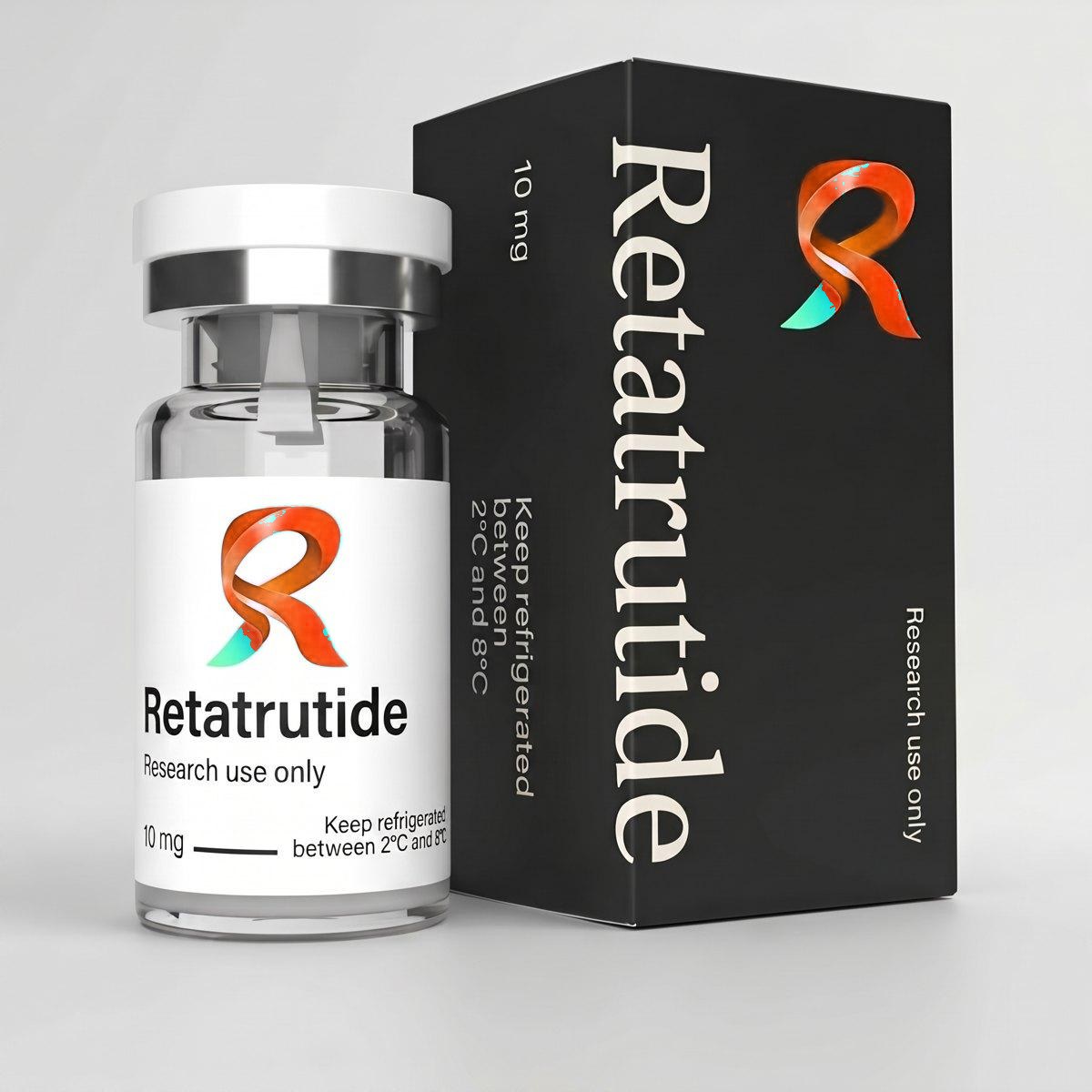
Research-grade · COA per lot